One Sunday evening in Cheyenne, Wyoming, 10-year-old Miriah listened intently as her pastor spoke about serving as a missionary in Ethiopia. She sensed the Holy Spirit stirring her heart, inviting her into mission work. Even though she was still in elementary school, Miriah clearly and confidently told everyone she knew at church that God had called her to mission work. Some smiled at the girl indulgently, but her pastor’s wife, who had herself served as a missionary in Ethiopia, believed the girl and affirmed her declaration.
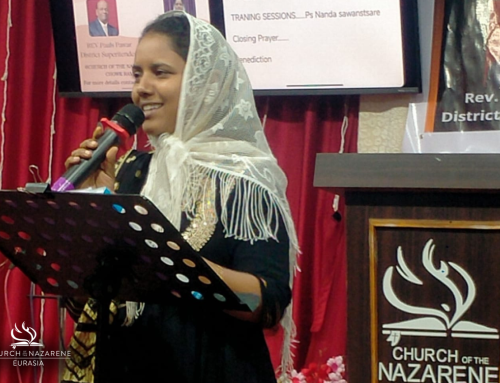
A few years later, Miriah stood in front of the Church of the Nazarene in Addis Ababa, on a
short-term trip arranged by her pastor’s wife. Miriah stood staring at the Church of the Nazarene symbol on the building, so familiar in shape but so different written in the local language.
“It was this moment of, like, this is bigger than Cheyenne,” Miriah recalls. “This is across the world.”
Around the same time, Justin Bronders was spending his summers as a teenager serving with his youth group in cities across the United States.
His youth pastor often told students that they were not the Church of tomorrow—they were the Church today.
“Everything we did was about being involved in the life of the Church,” Justin says, recalling that the mission teams served others, but the fruit of the trips were often reciprocal. “We had just as much to learn going there,” he says. “We received far more than we were ever able to give.”
In college, Justin spent time serving in Costa Rica and knew that God was calling him to a life in missions.
Justin and Miriah met, fell in love, and eventually married.
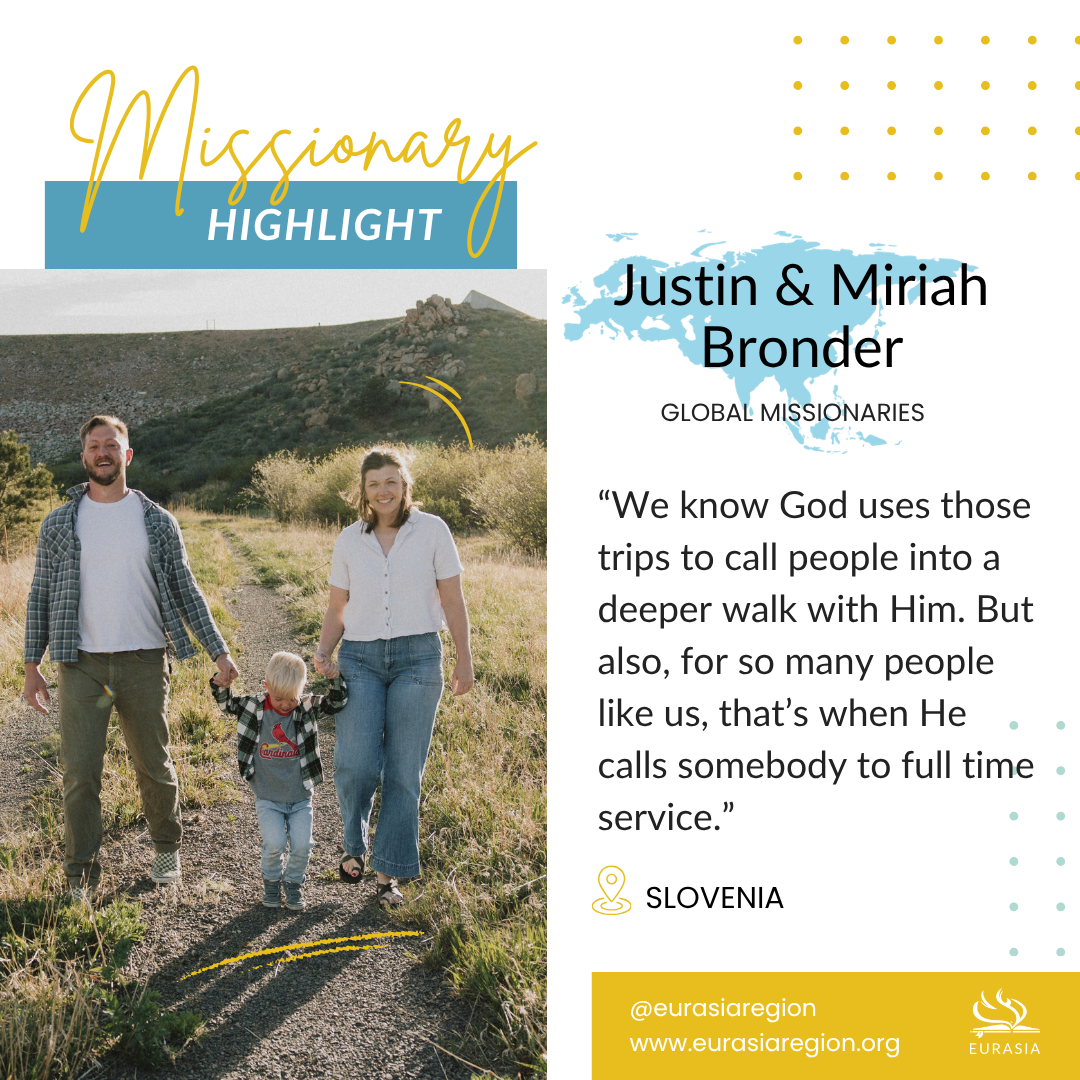
Now, the couple and their young son are settling into life in the Eurasia Region, where some of their primary roles include coordinating and facilitating participants in the Church of the Nazarene’s young adult initiative, The Cause.
The Cause aims to connect young adults with real-world opportunities to help build the Kingdom through serving missionally. The Bronders are excited to help The Cause grow.
“Not just providing opportunities,” Justin says, “but resourcing young people and providing means for them to go and serve, and just explore what it means to be the hands and feet of Jesus.”
Justin and Miriah’s experiences growing up played a large part in their passion for the work they do today.
“It was really kind of full-circle for us,” Justin says. “We know God uses those trips to call people into a deeper walk with Him. But also, for so many people like us, that’s when He calls somebody to full-time service.”
Miriah echoes Justin’s words, crediting her home church with fostering not only a love of missions but a confidence that young people, too, can play a valuable role in building the global church.
“God is calling children,” she says, suggesting that churches can help cultivate a child’s heart for serving Jesus by treating youth not as children to be entertained but believers to be invited into doing the work alongside church leaders.
“I grew up in such a small church,” Miriah says, “but people gave us jobs, important jobs, on a Sunday morning.”
“That’s really meaningful to feel like you matter,” she adds. “You are actually part of the community when you’re a kid.”
It would be easy for people to look at The Cause as a young adult ministry, Justin says.
“But I really think it’s the opposite of that,” he says, observing that it’s a support system to provide “resources and opportunities to plug young adults and young people into ministry—practical ministry, tangible ministry.”
Why should adults encourage young people to serve the life of the church now?
“It matters to the people that they serve now,” Justin says, tearing up. “It matters to the young people that they’re walking with. Even if it’s just one.”