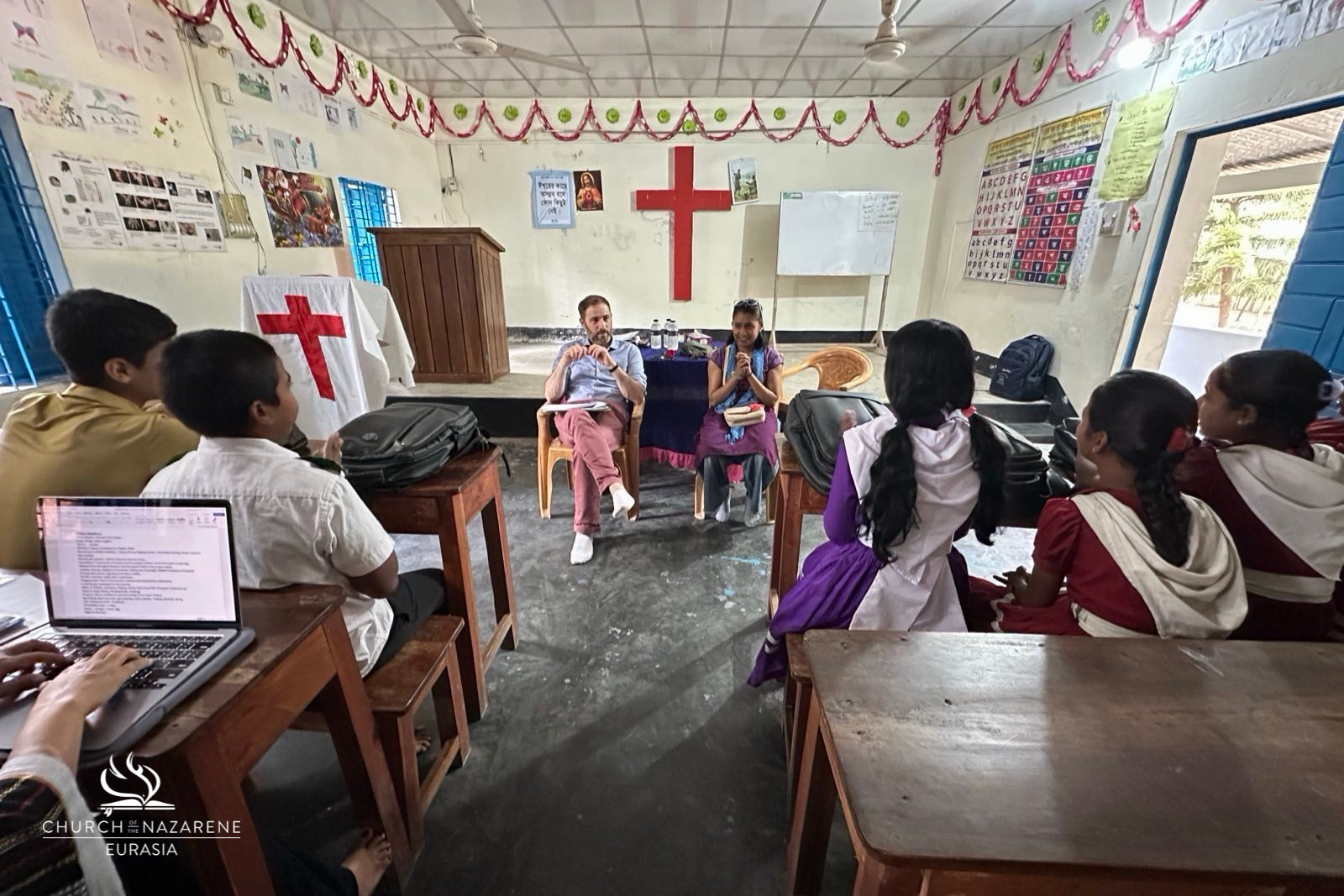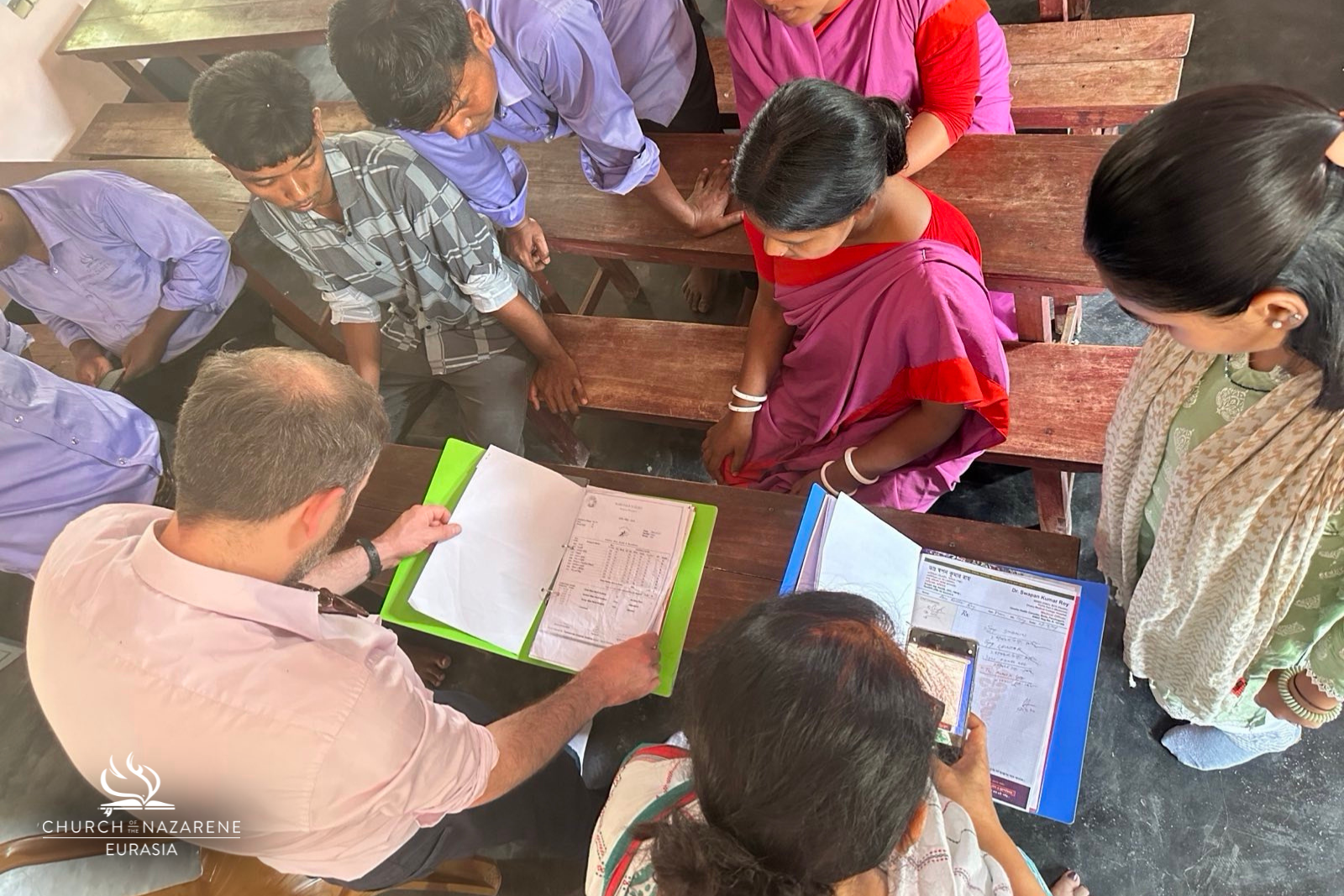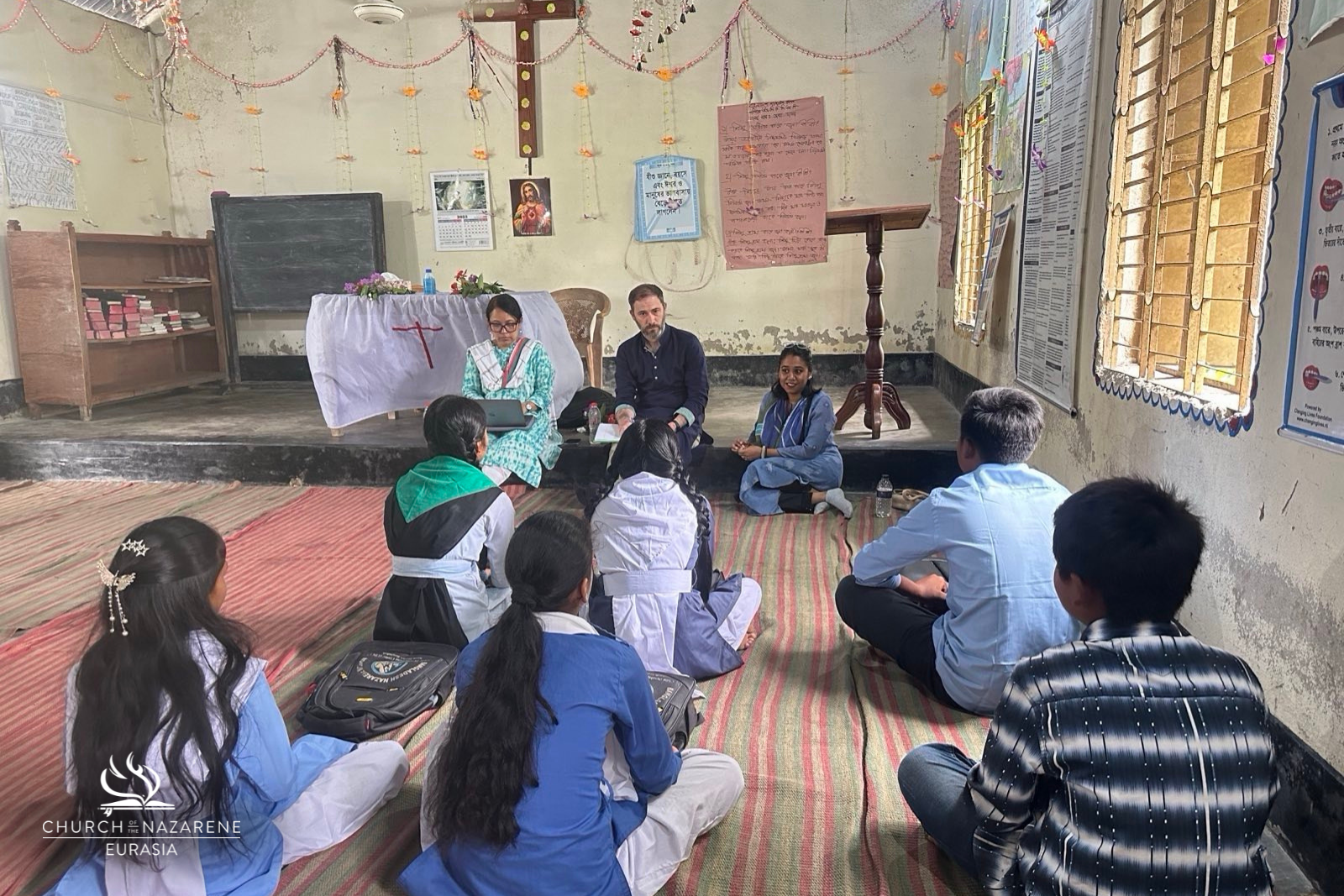
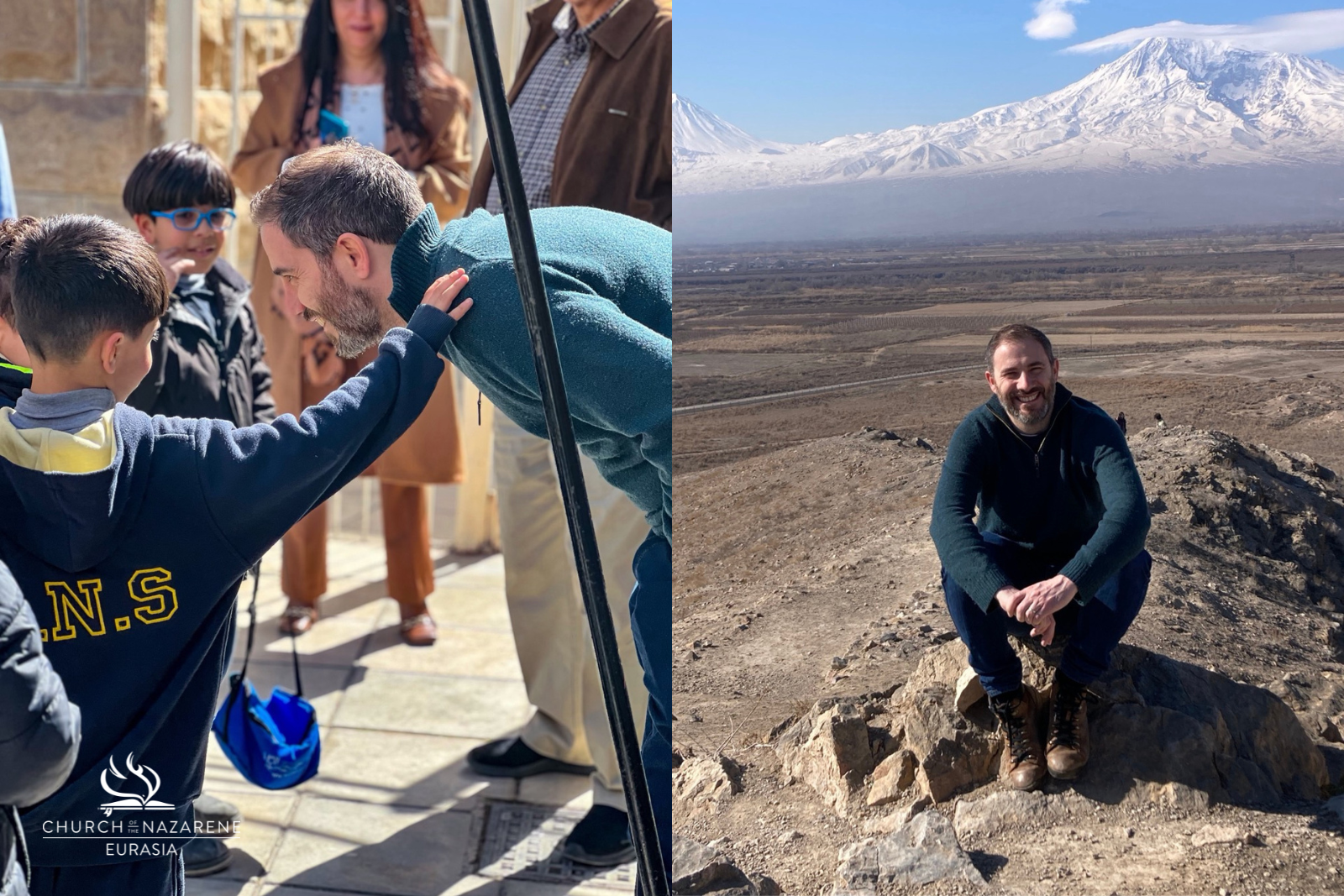
For the last six years, Tim Bowen-Evans has spent time in communities all around Eurasia—from Dublin to Dhaka—serving as Nazarene Compassionate Ministries’ (NCM) Eurasia Regional Coordinator. In August, he will bring his experience and heart for the vulnerable to the global NCM team in the newly created role of Director of Advocacy and Partnerships.
It’s a natural progression for a man who has spent much of his life seeking ways to help others. Tim grew up in Bangladesh—his father worked in community development, and his mother was a nurse—where he saw firsthand how inequality affected marginalized communities. His fifth-grade teacher, Mahatma Gandhi’s great-niece, introduced him to thinkers like Martin Luther King Jr. and other advocates of nonviolent resistance on behalf of the marginalized.
“I remember that period being hugely formative in terms of my outlook on the world and the importance of working for justice,” Tim says.
He attended Nazarene Theological College in Manchester, England, where he studied theology and continued to process how his heart and hopes had been shaped by the ultimate source of restoration: Jesus.
“The Bible comes alive to me when I look at how Jesus responds to people on the margins,” he says.
After NTC, Tim earned his master’s degree in development studies in Dublin. He then moved to Afghanistan, where he worked in community-based peace building, helping create spaces for people from multiple ethnic backgrounds to live together. He met his wife, Kate, in a coffee shop in Kabul, where she was working for an international relief and development agency.
When Tim’s job ended, he looked for what would come next. He had two friends studying the potential of aquaponics (aquatic farming techniques) in food deserts, which interested Tim. “We wanted to trial, could this be used in somewhere like refugee camps,” he remembers, “or urban areas where people don’t have access to soil or land, but could grow fruits and vegetables on their rooftops?”
But just a few days after his job ended, Tim received a call to take on a temporary post as pastor at the Nazarene church in Jerusalem. He agreed, with one caveat: could he bring a couple of friends and set up shop on the church’s roof with aquaponics?
The answer was a hearty yes, so the trio built 16 systems on top of the church, studying whether the structures could help people in Palestinian refugee camps and other urban areas grow their own food. The study was a success, and the team went on to trial systems in Jordan, Romania, Bulgaria, the West Bank, and Gaza Strip.
During his time in Jerusalem, Tim also began serving with NCM in places like Beirut and Amman, teaching a class on compassion in the local church through Eastern Mediterranean Nazarene Bible College. He helped organize a peace and justice conference in Bethlehem, where Nazarenes living in areas of conflict joined from around the globe to examine how different faith-based groups were engaged in reconciliation and peacebuilding. Following the conference, NCM hired Tim as its International Program Coordinator, beginning a partnership that’s now more than a decade old.
His years of field experience and his study of Jesus’ actions have cultivated a sense of steadfast urgency for justice. Tim is eager to encourage and equip believers with tools to help pursue justice and equity in their own communities.
“If we don’t have something to say to injustice in the world, or to poverty, or to trafficking, or to marginalization of people,” he says, “then I’m not sure what we have to say at all as a Church.”
In his new role with NCM, Tim will work to locate and help create those opportunities to act, connecting the global Church of the Nazarene with resources for advocacy. He knows the role is both far-reaching and nuanced, with individuals facing hardship in countless neighborhoods in countless ways.
“How do we work for peace and justice, and use our voice in a way that makes sense in each moment,” he says.
Tim says effective, Christ-centered advocacy that changes individual lives should eventually influence larger systems and networks.
“If we believe in bringing about change at a community level, it has to address systemic problems in society,” he says. “Advocacy work is a really important way of doing that.”
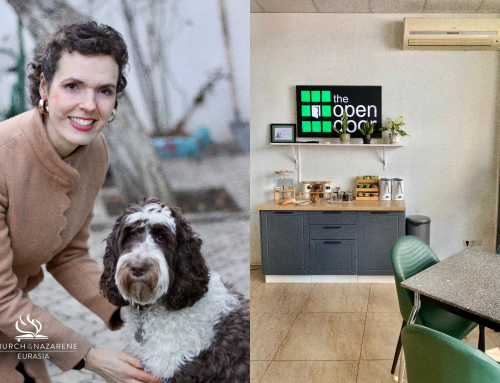
For example, Open Door Foundation in Romania—founded and supported by members of a Nazarene congregation in Bucharest—has been working at the local level for more than a decade to serve survivors of sex trafficking. Over the years, Tim says, the ministry’s fight against trafficking has made a lasting impact not only on the individuals who find hope through its programming, but also on the lives of future generations through efforts to change laws. He says its work has helped change the legal age of consent, and the team has helped make policy-level changes in Romania around trafficking. “And this is a really small group of committed Nazarenes and Christians from other denominations,” he adds. “But they’ve used their voice to really bring about a big change.”
Tim hopes to use the new advocacy and partnership role to elevate similar stories around the globe of God working through individual believers and congregations at the local level to help restore His Kingdom.
“We need to try and capture that and tell that story more,” he says, “of how important it is to use our voice.”
Tim is quick to point out that one of his primary goals will also be to continue helping empower people experiencing injustice to speak up on their own behalf.
“Advocacy’s not just about always using our voice, but helping amplify the voice of the poor, or amplify the voice of the marginalized,” he says. “Because they have something to say, and people need to hear it.”
Creating spaces for the oppressed to speak up will also help combat one consequence of inaction that Tim longs to eliminate: regret.
“I don’t want to be part of a church that is silent during injustice and apologizes retroactively,” he says, noting the silence of many faith organizations—including the Church of the Nazarene—during atrocities like South Africa’s apartheid. “How do we speak up at the right time?” he asks. “What is our message, and how do we use our voice, and how do we help?”
Fighting injustice is not simple, Tim acknowledges. “It is complicated,” he says. “It isn’t easy.” But advocacy at its simplest, which seeks to protect human dignity and life, is intrinsic to the Gospel.
“We’re resurrection people,” he says. “Churches all over the world are in situations where there may be things like apartheid or genocide, or exploitation of some marginalized group. Let’s use our voice now.”
In and through Jesus the potential is endless, and Tim intends to dream big.
“I would love to see Nazarene churches around the world using their voice to speak up on behalf of the downtrodden and speak hope into situations that are really broken and need new life,” he says. “There are no helpless situations when we believe that God is at work,” Tim says, adding that “God’s grace is at work all around us, and so I think our voice should be one of helpfulness, one of courage.”