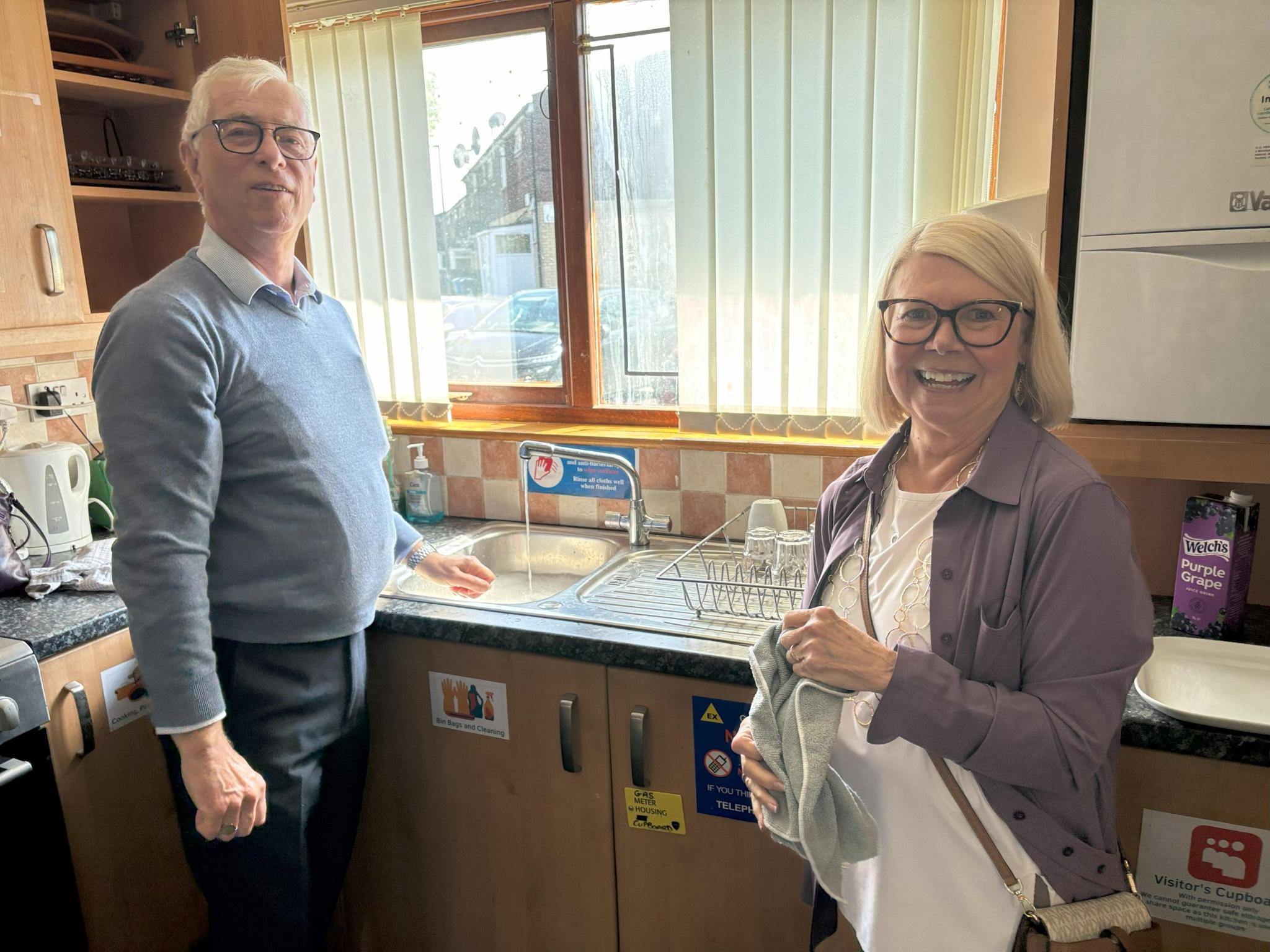
It is Sunday morning in England, and people fill the Morley Church of the Nazarene in Leeds. Along with countless churches across the globe, congregants pour themselves a cup of hot tea or coffee and chat with a friend. But at Morley, the dishes are reusable, and volunteers wash up after the crowd disperses, instead of hauling out trash bags of disposable cups and plastic spoons. The china cups and saucers were an intentional decision in an effort to care for creation, and now the church is being recognized for its effort.
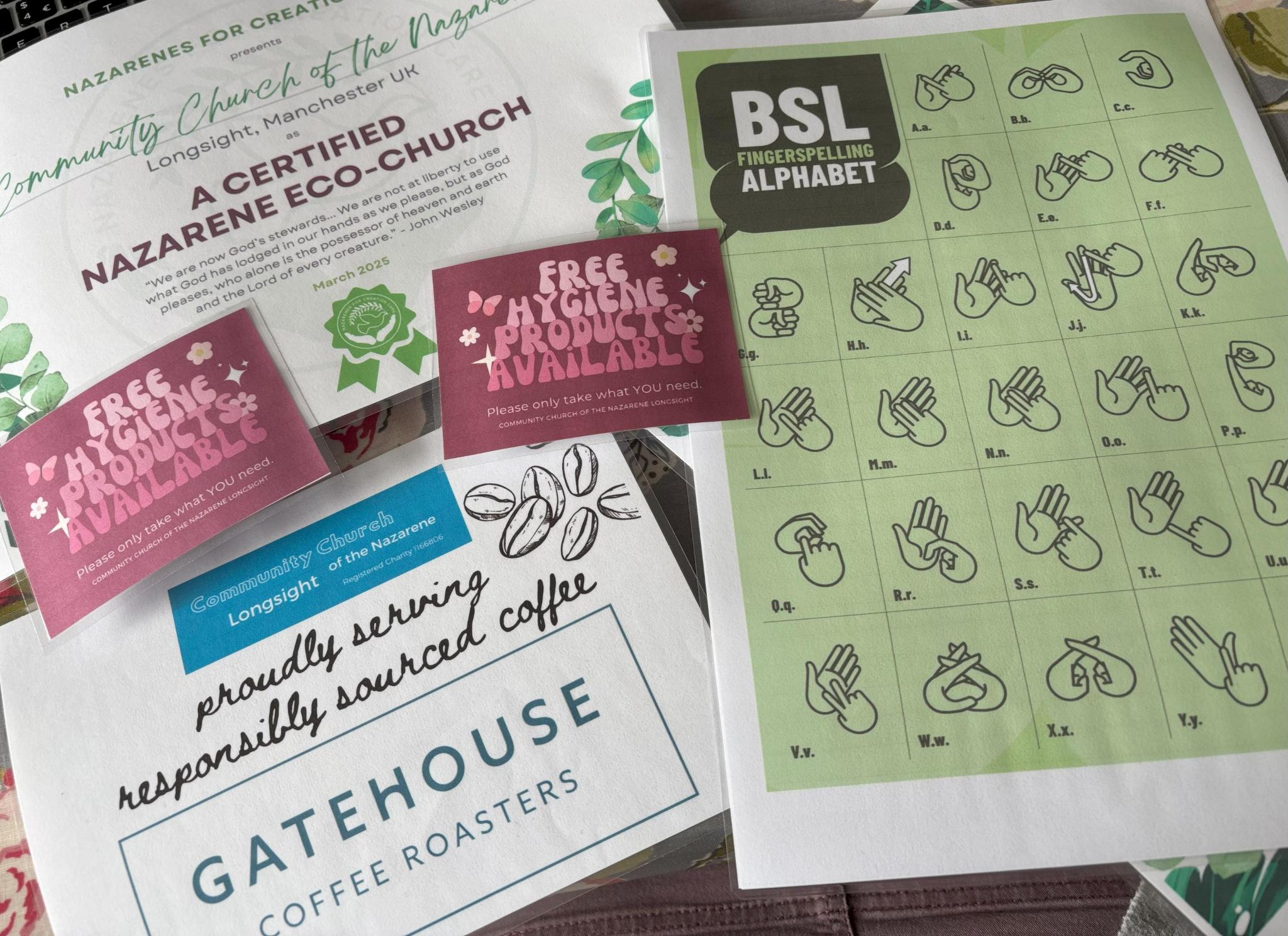
The congregation at Morley have been awarded “Certified Nazarene Eco-Church” status by Nazarenes for Creation Care (N4CC), recognizing the church for its thoughtful, deliberate stewardship of God’s creation. For Jennie Poppleton, building manager at Morley, the certification has brought a fresh sense of excitement into the church.
“It’s created a real buzz,” Jennie says, “and everybody’s really proud of it.”To receive certification, churches must form a team, sign a covenant focused on caring for creation, and engage in pursuing personalized solutions to local and global environmental issues. Changes don’t need to be dramatic to make an impact, as demonstrated by the 50 or so people who call Morley home.
Along with reusable mugs and teacups for Sunday fellowship, the church also creates craft projects with upcycled and repurposed goods, and when old lightbulbs go out, they’re swapped with LED. The changes arise naturally, aligning with Morley’s commitment to use every item as long as possible.
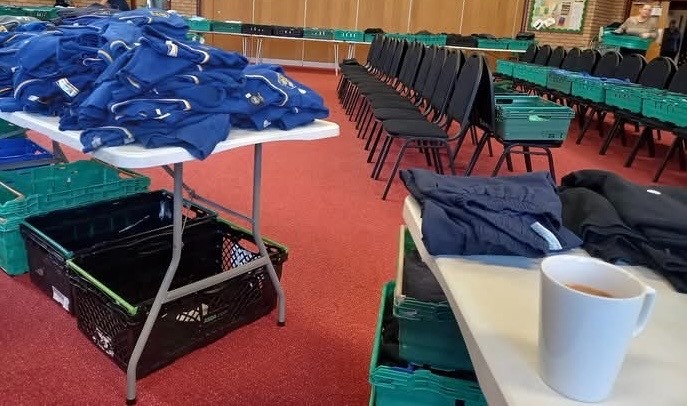
Its uniform exchange program emerged in a similar way. Morley’s charity shop often received donated school clothes, and as a parent and former primary school teacher, Jennie knew that school uniforms were often outgrown before they were outworn. After the Covid-19 pandemic subsided, area parents faced a dilemma. “When the kids started back to school, the parents were struggling,” Jennie says, “because they’d got kids who had suddenly grown, and the uniform didn’t fit them, and we couldn’t go shopping like we’d used to.”
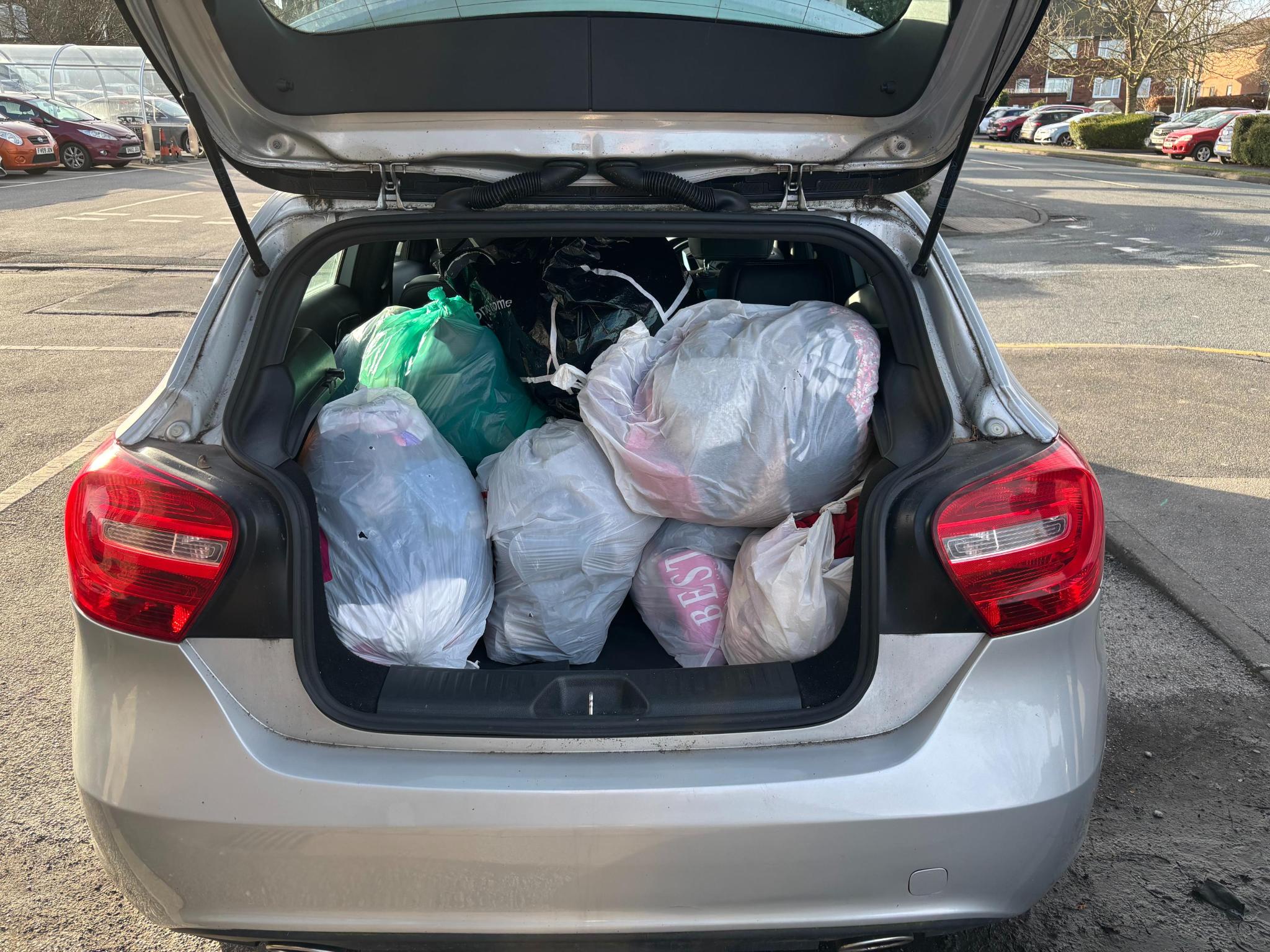
She and church volunteers saw the need and created the uniform exchange. Donations trickle in throughout the year, and each uniform is cared for by a member of the congregation: holes are patched, missing buttons replaced, and faulty zippers fixed up. During school holidays, the church hosts pop-up shops, where members of the community come and take what’s needed. More than 5,000 pieces of uniform have been saved from landfills while actively supporting families in the surrounding area.
The uniform exchange has also fostered relationships with community schools, which now donate unclaimed lost clothing at the end of the academic year, instead of throwing the items into the trash. Students are involved, too—Jennie and the team intentionally engage their own youth as a part of the ministry. “We have a team of young adults who help at the events,” she says, “to get them having conversations with their friends.” The Morley congregation wants its students to embrace the model as well, so that, Jennie says, “wearing second-hand becomes second-nature.”
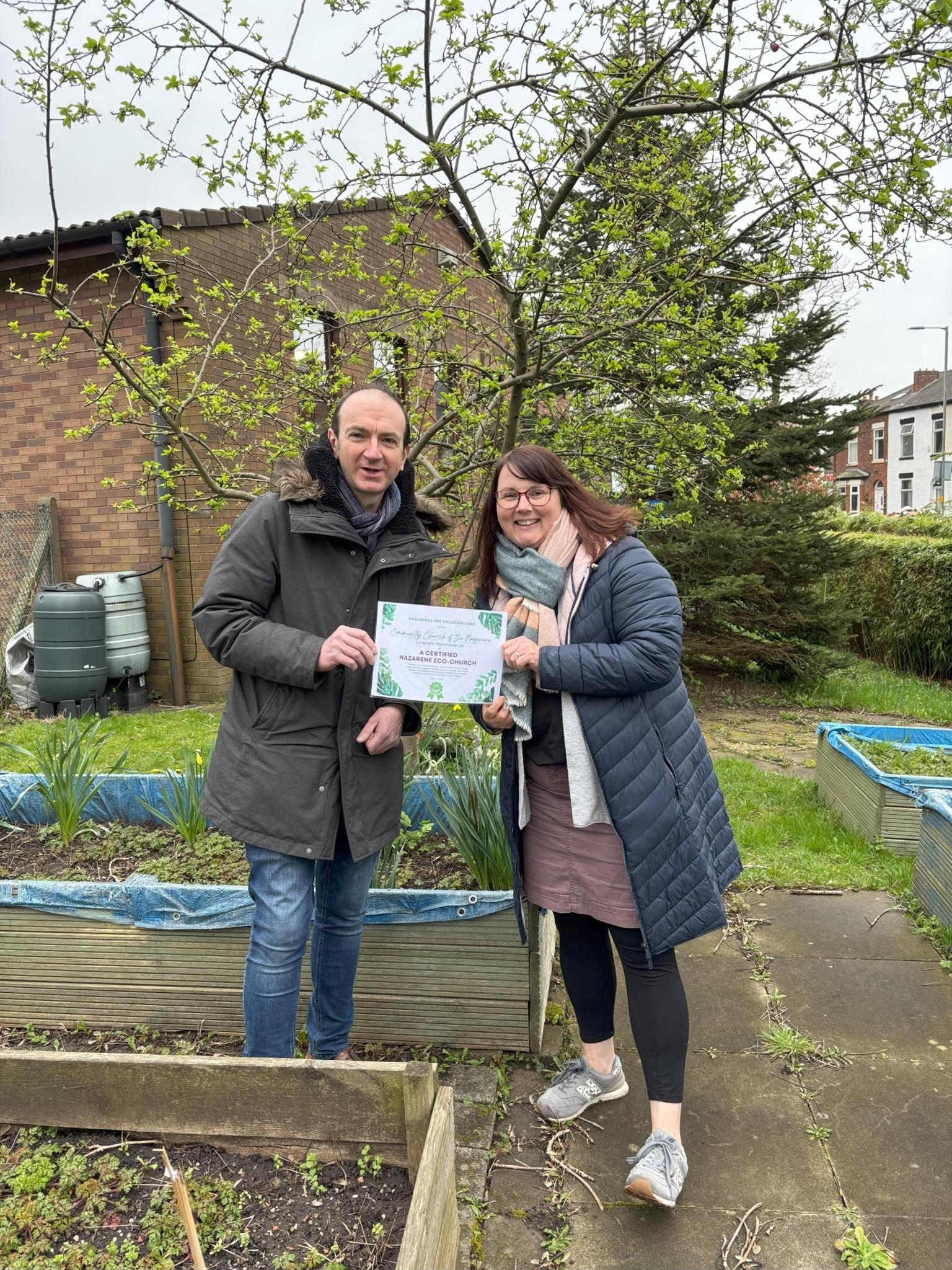
To the west of Morley, Manchester’s Longsight Community Church of the Nazarene has also received N4CC’s Eco-Church Certification. During the pandemic, the church had to rely on single-use, disposable cups, plates, and silverware, and the plot of land behind the church building became overgrown and underused.
Once the pandemic subsided, says Reverend Nicole McConkey, “We had to start to think again and say, ‘this is not good.’” The church returned to reusable cups and silverware for fellowship after Sunday services. For larger events, they purchase compostable single-use dinnerware.
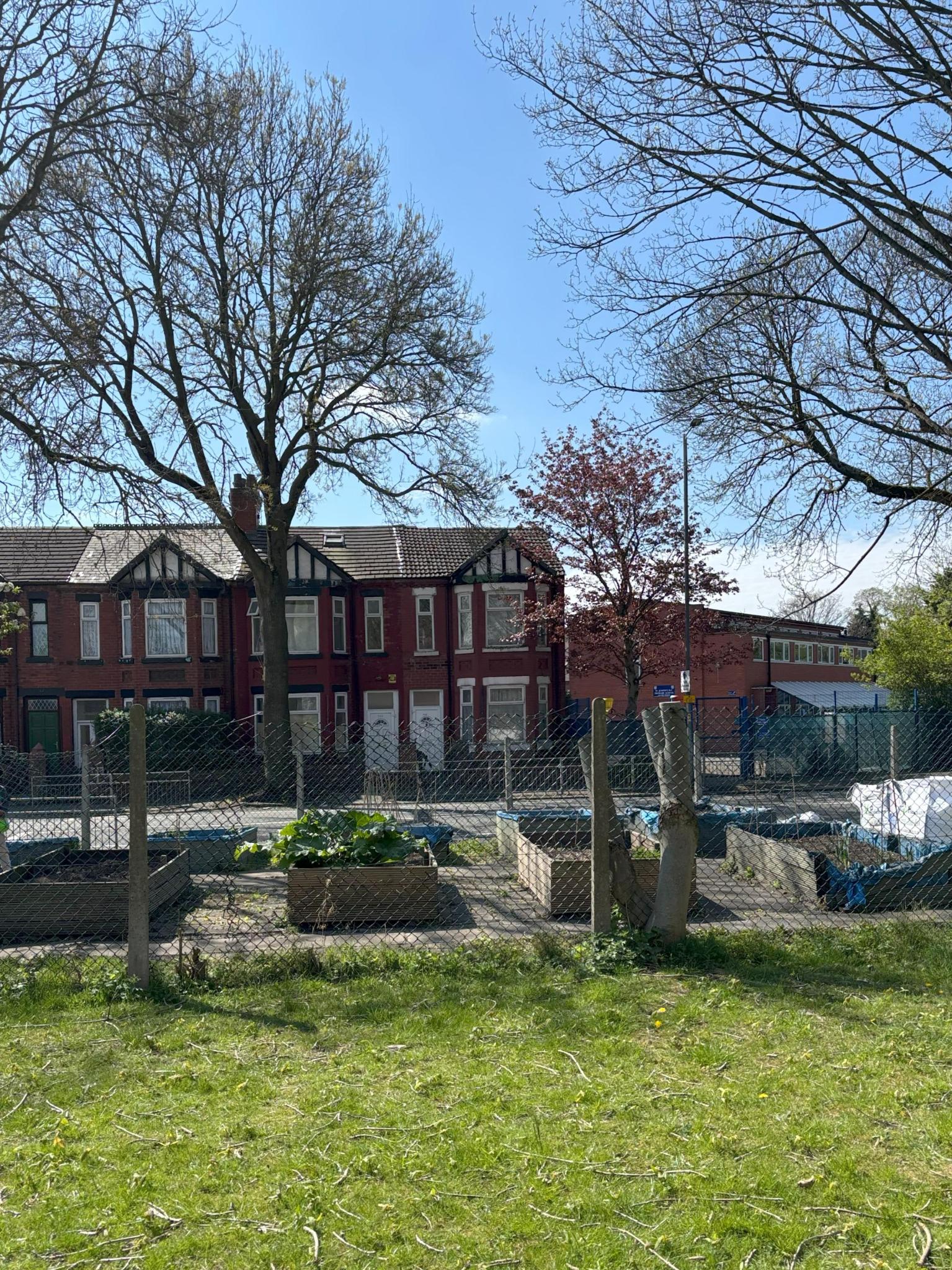
The overgrown plot of land behind the church is now lush—its weeds replaced by raised garden beds—thanks to a partnership with a local ministry serving the homeless. The ministry brings its clients out to work the garden and surrounding grounds. In turn, these visitors harvest, and cook the food they grow. Last season’s rhubarb became a crumble—the potatoes whipped into bangers and mash.
“I mean, it was absolutely overgrown,” Nicole says, remembering the garden’s prior state. “It was just amazing the transformation.”
Nicole finds the atmosphere of the garden restorative—both for the ground and those taking care of it. When she visits, she finds the atmosphere calming and inviting.
“It’s such a peaceful thing to see their clients work the ground with their hands,” she says, “and see things grow and the excitement when they can harvest.”
Back at Morley, Jennie says that adding a garden is also a part of the church’s plans, too. The building has a few planters, and the congregation hopes to expand and grow vegetables and fruit for their neighbors. The plan involves everyone, right down to the youngest churchgoers—Jennie hopes to have children’s Sunday school classes planting seeds and tending new starts in the garden.
Both women believe their churches are simply responding to what God has asked.
“I think we’re called to look after the world,” Nicole says. “The world has been entrusted to us, so it’s a responsibility that we have as Christians to look after it well and not just use it and abuse it.”
Jennie notes that getting certified by N4CC has been encouraging. “It reinforces what we’re doing is the right thing,” she says. “As a small church, to be able to have done something that is seen as quite a big thing—it’s given everybody a real boost.”
Small steps lead to big changes, and in Longsight and Morley, Nazarene churches are taking one step at a time to nurture what they’ve been given.
“Our vision is to continue with what we’re doing, grow where we can,” Jennie says. “I strongly believe that we’ve been given this gift that’s only ours to look after and nurture, and therefore what we’re doing is we’re making it better for those that are coming behind us.”